Research Overview
I study how formal and informal institutions influence whether criminalized communities and state actors choose cooperation or violence. When marginalized groups lack trust in state security providers, their responses to threats of violence are shaped by the institutional environments in which they operate. My research identifies the institutional conditions that can reduce harm or intensify conflict.
I use quantitative methods to understand these phenomena on a societal level. I use qualitative methods to investigate the causal mechanisms underpinning them. As a mixed methods researcher, I use interviews, surveys, and statistical analysis in partnership with community organizations.
Participants and partner organizations consistently note that their time and expertise are respected. As one interviewee shared, “nobody ever took time to listen to my story.” Centering such lived experiences is vital: when we listen closely to those most affected, we can craft policies and practices that are more informed, humane, and effective.

Research Fields
Comparative Politics
International Relations
Political Sociology
Criminology & Criminal Justice
Political Economy
Migration, Mobility & Borders
Irregular and Forced Migration
Human Smuggling and Migrant–Smuggler Relations
Criminalization of Migrants
Border Externalization and Enforcement
Human Rights in Migration Governance
Violence, Security & Governance
Governance Under Weak or Uneven State Capacity
Community Responses to Violence
Gun Violence and Public Safety
Informal Institutions & Non-State Governance
Diaspora & Transnational Politics
Migrant and Refugee Diasporas
Diaspora Political Engagement
Transnational Authoritarianism and Long-Distance Nationalism
Current Research
Migration Governance, Human Smuggling & Informal Institutions
I study how people move when borders become more restrictive. I examine the roles that humanitarian groups, community actors and smugglers play in shaping migrant safety. My fieldwork in West Africa and Europe documents how people make decisions and seek protection when formal institutions are limited.
Smuggling as Governance: Variations in Migrant Experiences under Border Externalization (Working Paper)
Why do some migrants experience protection from smugglers, while others face neglect or abuse? As irregular migration intensifies and border regimes harden, the stakes of these relationships have never been higher. While recent scholarship challenges the portrayal of smugglers as inherently violent, it often overlooks variation in migrant experiences. Drawing on 32 in-depth interviews with Gambian migrants, this article examines how smuggling enterprises’ organizational structures shape divergent outcomes. I develop a theory of endogenous institutions to explain how protective norms emerge—and how they are disrupted by state interventions such as police raids. I show that the relationship between smuggling modality and migrant protection is impacted by the intensity of externalization: where repression is low, iterative and embedded smuggling networks sustain accountability, but under high enforcement, secrecy erodes these mechanisms. By linking smuggling business models to migrant experiences, this study contributes to debates on criminal governance, informal institutions, and postcolonial migration governance. I show how actors deemed ‘criminal’ are in fact building systems of governance shaped not by lawlessness, but by the policy architectures of border externalization.
Documenting the In-Between: Methodological Innovations and Narrative Disruption in Researching Irregular Migration from West Africa (Working Paper)
This article advances methodological innovation in the study of irregular migration by centering the “in-between” phases of transit and return, often overlooked in dominant origin–destination models. Drawing on 32 interviews with Gambian returnees and over 1,000 regional surveys from migrants in West African transit hubs, the study challenges binary narratives—such as victim vs. agent or smuggled vs. trafficked—that obscure migrant agency and complexity. It proposes a migrant-centered, ethically grounded, and mixed-method approach that treats migrants as epistemic actors and documents their strategic navigation of smuggling networks, border externalization, and policy-induced precarity. The research reveals informal incentive structures within smuggling enterprises and shows how criminalization policies undermine protective mechanisms, increasing migrant vulnerability. By integrating qualitative depth with quantitative scale, the study offers a dual vantage point on migration trajectories, illuminating how short-term constraints and long-term interpretations interact. Methodologically, it demonstrates how relational fieldwork and local partnerships can access criminalized populations and produce richer, more respectful data. Politically, it treats method as intervention, advocating for research practices that disrupt dominant policy imaginaries and contribute to more just migration governance. While grounded in ethical engagement and attention to migrant perspectives, the project’s key contribution is to show how multi-method strategies can capture the lived realities of smuggling and produce comparative insights.
Human Smuggling and Frontiers in Political Science (Working Paper)
How does governance evolve and what are their long-term implications on power dynamics between states, states, and social actors and between social communities? This question goes to the heart of political science. Criminal economies, such as human smuggling, offer the opportunity to examine these questions in a new light. Human smuggling has become an international political phenomenon that has implications affecting political violence levels, interstate relations, and even intra-state politics. Political scientists’ research can improve state responses to human smuggling, including interstate cooperation.
A literature review.
Between a Rock and a Hard Place: Experiences of Undocumented Migrants (Working Paper)
Why would a migrant use a smuggler despite the criminalization? To answer this question, I focus on West African migrants traveling illicitly to Europe drawing on 32 qualitative interviews with returnees conducted across The Gambia in June 2022 and on a quantitative survey of over 1000 migrants from 24 West African countries. The Mixed Migration Centre (MMC) conducted the survey in early 2020 in Burkina Faso, Mali, and Niger.
European migration management policies are undercutting West Africa’s free movement practices. In response, the human smuggling industry blossomed. Policymakers describe smugglers as violent lawbreakers preying on hapless migrants, who need protection. To protect migrants, policy makers criminalize the act of smuggling. They inform the migrants of the dangers of smuggling. Yet, despite more deterrence, migrants continue to rely on them for their journeys. This runs counter to the intent of the criminalization policies, and presents a puzzle:
Assumptions underlying current migration policies do not align with the lived realities of migrants. The data challenges notions that migrants are ill-informed on the dangers of the criminalized journey or that smugglers are perceived as criminal actors. This research informs our understanding of the migrant-smuggler relationship and migrants’ vulnerabilities as they travel.
Funded by the National Science Foundation (NSF).
Resilience in the Face of Terror: Clandestine Migration Experiences
This research examines the drivers and experiences of irregular migrants through a mixed method approach. The essays focus on the migrant experiences with a smuggler while migrating clandestinely, on what drives migrants to hire smugglers, and on what drives changes in rates of asylees arriving in Europe. The goal of this research is to deepen our understanding of migrants’ experiences before and during migration, and challenge assumptions underlying current migration policies. This research examines undertheorized aspects of governance, both formal and informal, and its impact on structuring migrants’ choices. I examine the question of governance from various levels.
I research the macro-level effect of poor governance as a push factor for migration. Then, I investigate the phenomenon of governance at the meso-level as a facilitating and constraining factor of the migration journey. For the latter, I investigate how migrants relate to migration policies, and how the illicit economies that facilitate migration self-organize. I look at the meaning making of the state-led migration policies, and then I examine the informal institutions that determine the migration experience. Additionally, this dissertation questions some of the defining categories in academic research and policy approaches. The two main binary that I critically engage the categorization between the forced migrant and the economic migrant, and the theoretical division between structure and agency-based explanations for migrant experiences of violence.
Drivers of clandestine migration
In the first paper, I research the drivers of clandestine migration using statistical analysis. This is a quantitative analysis of global migration streams to Europe. Specifically, I examine whether changes in a state’s governance impact the number of asylum applicants from the country to Europe. I measure state governance using indicators from the Fragile State Index (FSI) from the Fund for Peace (FFP). My findings suggest asylees may be leaving because of deteriorating security institutions.
Why migrants use smugglers (despite the criminalization of smuggling)
The second paper uses a mixed method approach to assess why migrants use smugglers, despite the criminalization of human smuggling. The case is West African migration to Europe. This paper pairs 32 qualitative interviews of migrants with analysis of a quantitative survey of over 1000 migrants from 24 West African countries. Through these two data streams, I argue that the assumptions underlying current migration policies do not align with the lived realities of migrants. I challenge notions that migrants perceive smugglers as criminal actors, or that migrants are unaware of the dangers that being smuggled entails. Through this analysis, I also deepen our academic understanding of the smuggler migrant relationship.
Migrant experiences with smugglers
The final paper uses a qualitative approach. I examine the variation of migrant experiences when hiring a smuggler for their clandestine journey to Europe. Through semi-structured interviews of Gambian returnees, I uncover three different structures of smuggling enterprises in The Gambia. I then link these structures to varying levels of incentives for the smuggler to protect the migrant. I argue that outside policy shocks then affect these incentive structures in a manner that renders migrants more vulnerable.
Diaspora Politics, Transnational Mobilization & Democratic Backsliding
I investigate how migrant communities shape politics in both their countries of residence and their countries of origin, especially during moments of democratic backsliding. Through qualitative fieldwork and surveys with the Turkish diaspora in Germany, I examine how identity and political messaging shape diaspora engagement. This work forms the basis for a broader comparative project that will extend to additional cases in the future.
Turkish Diaspora’s Electoral Influence in a Foreign Policy Context
This research examines how diasporas influence home-country politics amid democratic backsliding and shifting migration policies. Fieldwork will focus on identity and political mobilization in transnational contexts. I’m Principal Investigator of the project Turkish Diaspora’s Electoral Influence in a Foreign Policy Context which explores why Turkish migrants in Germany support an autocratic regime despite living in a democracy. Funded by the Kathryn Wasserman Davis Collaborative in Conflict Transformation. Fieldwork was completed in summer of 2025. We’ve added a survey component making this research mixed-methods.
Research in progress.
Funded by Kathryn Wasserman.
Future Research
Political Autonomy and Governance of Human Smuggling
Future Research
Research on the variation in how governments respond to human smuggling. Many migrant sending governments are under pressure by migrant receiving governments to criminalize human smuggling, despite domestic support for migration. There is variation on whether governments criminalize the practice, and to what extent they do so. I intend to use Senegal and The Gambia as case studies. I will conduct interviews with policy makers and review official documents to trace the process of the country’s human smuggling policy. Understanding this process of policy making by cross-pressured governments will deepen our understanding of the politics of institutional change.
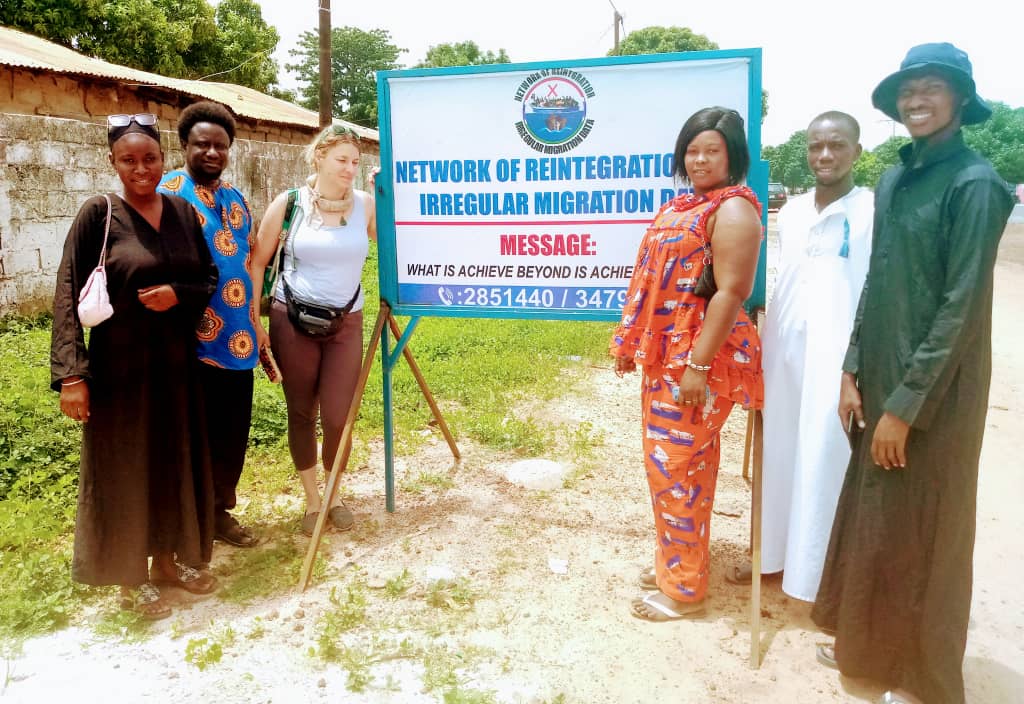
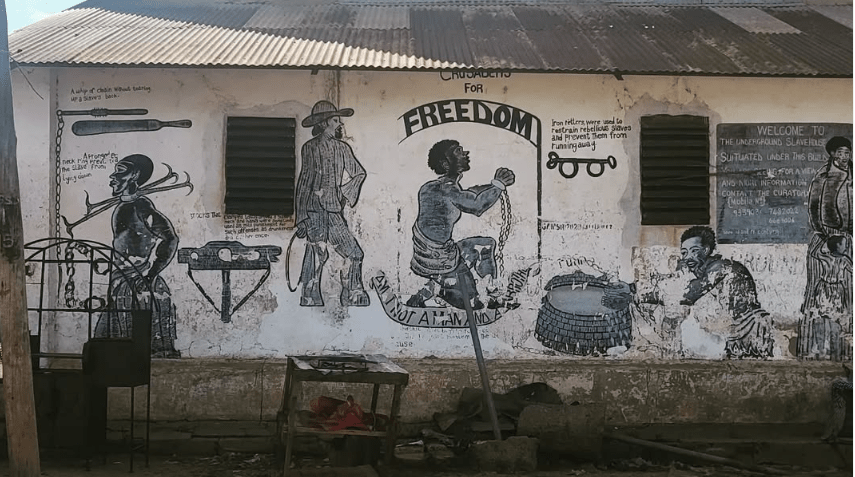
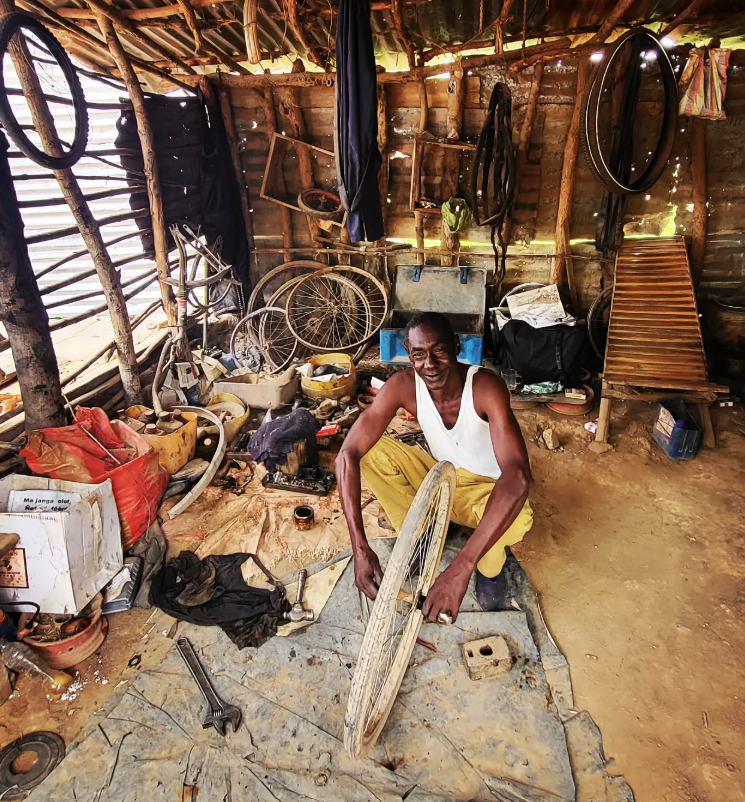

Fieldsites
West Africa
Gambia, Senegal, Nigeria
United States
Washington DC
Europe
Germany (Berlin)

Thank you
Mellon Foundation Public Humanities Lab Funding, Middlebury College Data Science Grant, Kathryn Wasserman Davis Collaborative in Conflict Transformation Research Grant, Ada Howe Kent Pedagogy Funding at Middlebury College, National Science Foundation (NSF) Sociology Dissertation Improvement Grant
 Natalie Chwalisz