Dickinson College
Professor Natalie Chwalisz is a Visiting Assistant Professor of Law and Society at Dickinson College. She designs courses that build real-world skills, encourage ethical reasoning, and prepare students to contribute thoughtfully to their communities. Her teaching emphasizes that complex problems require evidence, collaboration, and the ability to navigate disagreement respectfully.
Students learn through case studies, role playing activities, and collaboration.
Community-engaged and experiential learning
Dr. Chwalisz regularly incorporates community-engaged learning into her courses. Students work with partner organizations to create public-facing projects, such as Digital StoryMaps for Gambian NGOs focused on migration and youth empowerment. These collaborations strengthen students’ communication, research ethics, and project management skills. She cares that students are active learning. View storymaps.
Skills you’ll develop: critical thinking, communication, and team-leading skills, while emphasizing the importance of respectful interaction.
Role playing activity example
In my International Political Economy course, students participate in a Gambian economic policy simulation, taking on roles as government ministers, advisors, and community actors. They debate how a low-income government should allocate limited resources, learning negotiation, facilitation, and policy analysis skills.
Using archives and primary sources
We use archival materials from the Carlisle Indian School Digital Resource Center. Engaging directly with primary sources helps students examine Indigenous histories and connect past injustices to contemporary legal and policy debates.
Multimedia tools students use
My courses make extensive use of multimedia tools, including:
- ArcGIS StoryMaps
- Digital storytelling
- Collaborative annotation platforms
These tools deepen understanding and strengthen your ability to communicate complex ideas.
Leadership and facilitation skills students learn
Are you open to “challenge ideas, not individuals”? What about “Be open to discomfort and learning”? These are values that students have collaboratively established as guidelines for respectful engagement, setting ground rules that promote respectful disagreement, encourage vulnerability, and allow for constructive conflict. These norms help manage diverse political opinions and foster a respectful learning environment.
You’ll gain responsibility to lead discussion. In my senior seminar, Illicit Economies in Comparative Perspectives, students lead hour-long discussions. Through rubrics, modeling behavior and instructions, students engage critically with your peers and connect their responses.
Skills you’ll develop: critical thinking, communication, and team-leading skills while emphasizing the importance of respectful interaction.

Courses Taught
Comparative Law
About
This course introduces students to the field of comparative law by exploring how legal systems reflect and shape the societies in which they operate. Students examine major legal traditions—including civil, common, and indigenous law—and analyze how law functions in democratic, authoritarian, and post- colonial contexts. Through case studies, role play, and collaborative analysis, students investigate law as a social construct and develop foundational skills in legal reasoning, comparative analysis, and academic research. Comparative case studies such as hate speech regulation and legal responses to climate change will help students apply theoretical frameworks to real-world legal challenges and deepen their understanding of law’s role across jurisdictions and cultures.
International Political Economy
About
This course examines the politics of global economic relations, focusing on how states, firms, and international institutions navigate globalization and interdependence. Students engage with both classic and contemporary debates on free trade and protectionism, monetary systems, foreign direct investment, regional integration, and the role of international institutions like the WTO, IMF, and World Bank. The course emphasizes linking theory to practice by analyzing contemporary issues such as inequality, migration, climate change, and global health.
Illicit Economies in a Global Perspective
About
In this course, we will focus on patterns of illegal activity in the international economy. Students will study phenomena such as illegal trade in arms, animals, and drugs, and the trafficking and smuggling of human beings. The purpose of this course is to introduce students to the systematic analysis of the illicit global economy. Students will be taught to examine the causes of illicit markets, the actors involved (entrepreneurs, consumers, governments), and how markets respond to efforts to combat them. The objective is for students to understand the phenomenon and its drivers, and to translate this understanding into a critical evaluation of current policy approaches. (International Relations and Foreign Policy)
Politics of International Migration, Borders, Migration Controls
About
Currently, both forced and voluntary migration is at historic highs. Simultaneously, immigration control is becoming a global phenomenon. The rise of border control contrasts with the vulnerability of many migrants today. This course will give an overview of migration and forced migration and then look at issues and rationales in migration control from a comparative perspective.
The questions we will ask are: What drives migration? What are the historical roots of migration? What is the purpose of immigration control? What are the politics of migration control in comparative perspective?
This course incorporates various levels of analysis (international, national, subnational, transnational) and draws on interdisciplinary theoretical frameworks. Students will gain an understanding of migration and the legal frameworks governing the process. Students will then explore how migration relates to state sovereignty, human rights, and international law. Students will also interrogate the process of creating immigration policies, and the actors and stakeholders driving this process. (International Relations and Foreign Policy)
This course is part of the Mellon Foundation Public Humanities Labs Initiative on Migration supported by the Axinn Center for the Humanities. As such, you will complete a public facing digital product as your main assignment, and you will be working with a Gambian Partner Organization in the process.
Introduction to Comparative Politics
About
This course introduces basic concepts of political science, the comparative study of political systems, and the logic of comparative inquiry. The course is organized around three modules, each motivated by a big question comparativists ask: What is the modern state? Why and how do they fail? Why are some countries democratic and others authoritarian? Why are some rich and others poor? Each module starts with a basic introduction to key concepts and ideas and advances with more complex theories. We focus on specific countries to study how concepts and ideas apply to real cases. By the end of the course students will learn how to classify, compare, and analyze governments, and think critically about big problems that motivate comparative political inquiry.
Storymaps

Routes of Risk: Land Migration from The Gambia
Risks along the journey, local and international policies, and the stories of missing migrants by Lima Abed, Mandy Berghela, Amanda Hill, Hugh Hutchinson, and Ava Raiser
April 9, 2025

Environmental Drivers of Migration
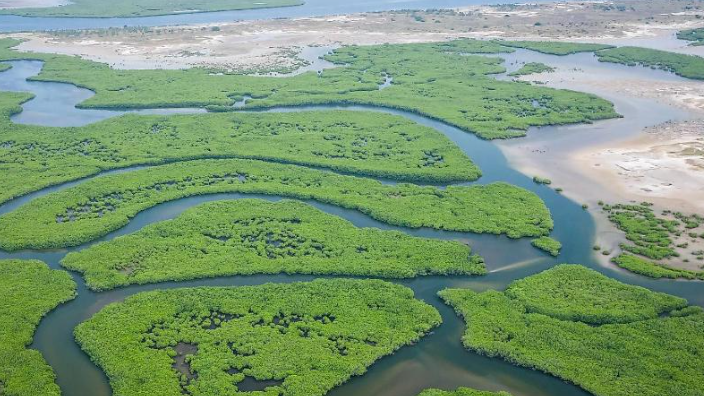
Climate Change and the Gambia by Laura Youel Page, Kyle Santiago, Efrata Eshetu, and Mia Feldman
November 18, 2025
Sea Migration from The Gambia
A Story Map Detailing the Perilous Journey Thousands of Migrants Undergo in Search of a New Life in Europe by Gabriella Kerrigan, Charlie Werner, Jack Dunlop, Deco Siefer, Gianluca Saracino
April 22, 2025
 Natalie Chwalisz